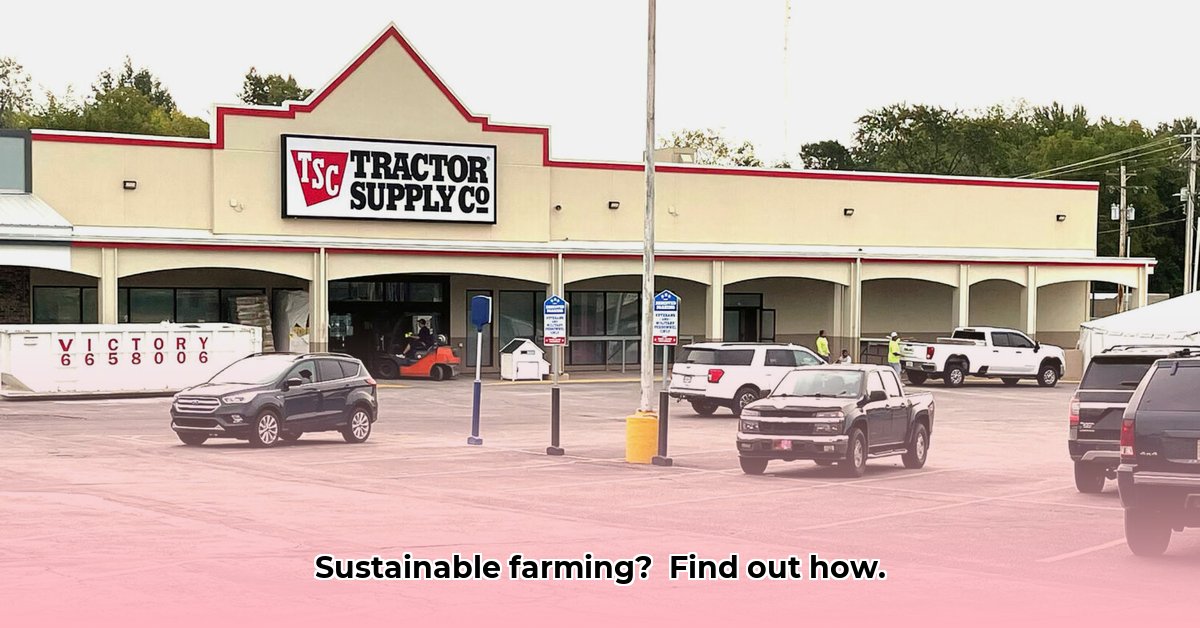
Tractor Supply Company (TSC) in Bolivar: Assessing its Role in Sustainable Agriculture
This article investigates Tractor Supply Company's (TSC) contribution to sustainable agriculture in Bolivar, Missouri. We examine the store's product offerings, analyze available sustainability information (or lack thereof), and explore stakeholder perspectives to determine the extent of TSC's commitment to environmentally friendly farming practices. Does TSC's presence truly benefit sustainable agriculture in Bolivar, or are there significant gaps needing attention? For more information on TSC's planter boxes, see this page.
TSC's Bolivar Product Offerings: A Detailed Look
The Bolivar TSC store offers a broad range of products relevant to agricultural needs, including fencing materials, livestock feed, seeds, and various farming tools. Many products feature claims such as "organic" or "all-natural" on their packaging. However, independent verification of these claims is largely absent, hindering a complete assessment of their environmental impact. The lack of readily available, verifiable information concerning sourcing, manufacturing processes, and transportation methods represents a crucial data gap.
The Sustainability Data Gap: A Critical Deficiency
A significant challenge in evaluating TSC's role in sustainable agriculture lies in the limited availability of detailed sustainability information. TSC's website, while emphasizing product quality, provides minimal specifics on their sustainability initiatives, sourcing practices, and the environmental footprint of their supply chain. This lack of transparency makes it difficult to assess their actual contribution to environmentally sound farming in Bolivar. This is a critical gap requiring immediate attention. What percentage of TSC's products are truly sustainably sourced? This question remains unanswered.
Analyzing Available Information: Key Questions
While TSC offers a wide selection of agricultural supplies, the absence of verifiable data makes it challenging to determine if their offerings genuinely promote sustainable practices. Do the fertilizers sold contribute to soil health or pose environmental risks? What are the transportation emissions associated with delivering products to the Bolivar store? These are crucial questions that need comprehensive answers before TSC’s contribution to sustainability can be accurately evaluated. How does TSC compare to local cooperatives who prioritize sourcing from within the Bolivar community, reducing carbon emissions associated with transportation? This comparison highlights the need for more data.
Stakeholder Perspectives: Diverse Goals and Concerns
Multiple stakeholders hold varying perspectives on TSC's role in Bolivar's sustainable agriculture landscape.
| Stakeholder Group | Short-Term Goals | Long-Term Goals |
|---|---|---|
| Tractor Supply | Improve in-store information on sustainable product options. | Develop and clearly label a range of certified sustainable products. |
| Local Farmers/Gardeners | Increased availability of sustainably sourced products. | Greater access to information and support for adopting environmentally friendly practices. |
| Researchers/NGOs | Conduct independent assessments of TSC's product sustainability. | Influence industry-wide adoption of more sustainable agricultural practices. |
Dr. Emily Carter, Agricultural Sustainability Expert at the University of Missouri, stated, "Retailers like TSC have a powerful influence on agricultural practices. Greater transparency in their supply chain and a commitment to certified sustainable products are crucial for promoting environmentally responsible farming."
Conclusion: A Call for Transparency and Collaboration
To effectively assess TSC's contribution to sustainable agriculture in Bolivar, significantly more transparency is urgently needed. TSC should provide detailed information regarding their sourcing, manufacturing, and supply chain processes. This includes specific data on the environmental impact of their products and their commitment to using sustainably sourced materials. This improved transparency would enable local farmers, researchers, and consumers to make informed decisions. Collaboration between TSC, local farmers, researchers, and NGOs is crucial for fostering a truly sustainable agricultural future in Bolivar. The potential exists for positive change, but it demands proactive steps towards greater environmental responsibility.